The marina at sunset
Jocelyn’s story

From an idea to my own boat

The decisions, details and turning points that made Jocelyn what she is today.

The story so far

Built around the way I wanted to sail

This is not a list of passages. Those have their own place in the passage archive. This is the story of the boat herself: why I ordered her, the choices made while she was being built, the details of commissioning and the discoveries that followed.

July 2025

The decision

Being built for me

I had bought new boats before, but they had been stock boats which were subsequently adapted. Retrofitting equipment meant taking apart work that had already been completed at the factory, and previous experience had included squeaks, loose trim and things that never felt quite as they should.

This time I wanted a boat built specifically for me. I ordered Jocelyn in July 2025 and selected almost every available option, with the aim of creating an exceptionally comfortable and easily managed boat for predominantly single-handed sailing on the East Coast and around the UK.

She was never intended for extreme passages or ocean crossings. The brief was much more personal: enjoyable coastal sailing, in suitable weather, with the independence and comfort to make me want to keep going back aboard.

Around December 2025

Arrival

Jocelyn reaches the UK

Jocelyn arrived in the UK at around the end of 2025. For a time she remained ashore beneath her full transport wrapping—a finished boat in one sense, but still some distance from being ready to hand over.

When the wrapping came off, the hull, keel, rudders and cockpit could finally be seen together. Much of the equipment remained protected while the commissioning work began.

Around January 2026

Commissioning begins

Preparing the hull

One of the first visible stages was preparing the hull below the waterline. It was abraded and carefully masked before the antifouling was applied to the hull and keel. Cockpit and wheel covers were also beginning to appear as Jocelyn moved from factory delivery towards being my boat.

Commissioning

East Coast sailing

Beaching legs—and somewhere proper to keep them

I specified beaching legs because Jocelyn would be sailing in the shallow waters and drying locations of the East Coast. I was particular about their installed length: they should finish a few inches above the bottom of the keel, allowing the boat’s weight to remain on the keel while she settles with a slight, controlled lean on a suitable firm seabed.

The photographs are also an important technical record of the fittings and the intended clearance. At this point the arrangement had not yet been tested in use.

I also wanted the legs to have a proper home aboard. Shaped supports were made inside the rear port locker, then a removable shelf was fitted over them. The legs are kept securely together and out of the way, while the shelf preserves a flat surface for carrying other equipment above.

Commissioning

A considered finish

Choosing the artificial teak

I declined the factory-fitted teak because I did not like its single-strip appearance. Experience with earlier boats had also shown me how much maintenance traditional teak could require and how unattractive it could become as it weathered.

A local company produced a synthetic teak-effect alternative. This photograph was sent for my approval and shows the bordered layout across the cockpit, helm seats, bathing platform and folding transom sections. It has caused no problems, looks and feels like wood, has not discoloured and I remain extremely pleased with the choice.

Commissioning

Decisions in the details

Making the boat practical

Commissioning involved a continuing exchange of questions and approvals. Where should the diesel-heater control sit? Where would a USB and USB-C charging point be most useful at the helm? How could the starboard aft locker be made safe and usable when hoses, cabling and electrical equipment had been left exposed beneath it?

These were not glamorous decisions, but they mattered. The locker gained a removable protective floor, creating useful storage without sacrificing access for inspection. The charging point went where it could support the phone and iPad while under way. Each small decision made Jocelyn work better for the way I intended to use her.

Commissioning

Identity and safety

The blue hull wrap

I agreed the blue hull-wrap colour and the final design, including the additional Performance and Swing Keel lettering. The Swing Keel wording was not there to boast about the specification. It was a safety message.

With the keel raised, Jocelyn can cross water that may be too shallow for another yacht. I wanted a skipper following astern to see the wording and think before assuming that their boat could safely follow the same route.

18–19 February 2026

Single-handed communication

Making the radio work from chart table to helm

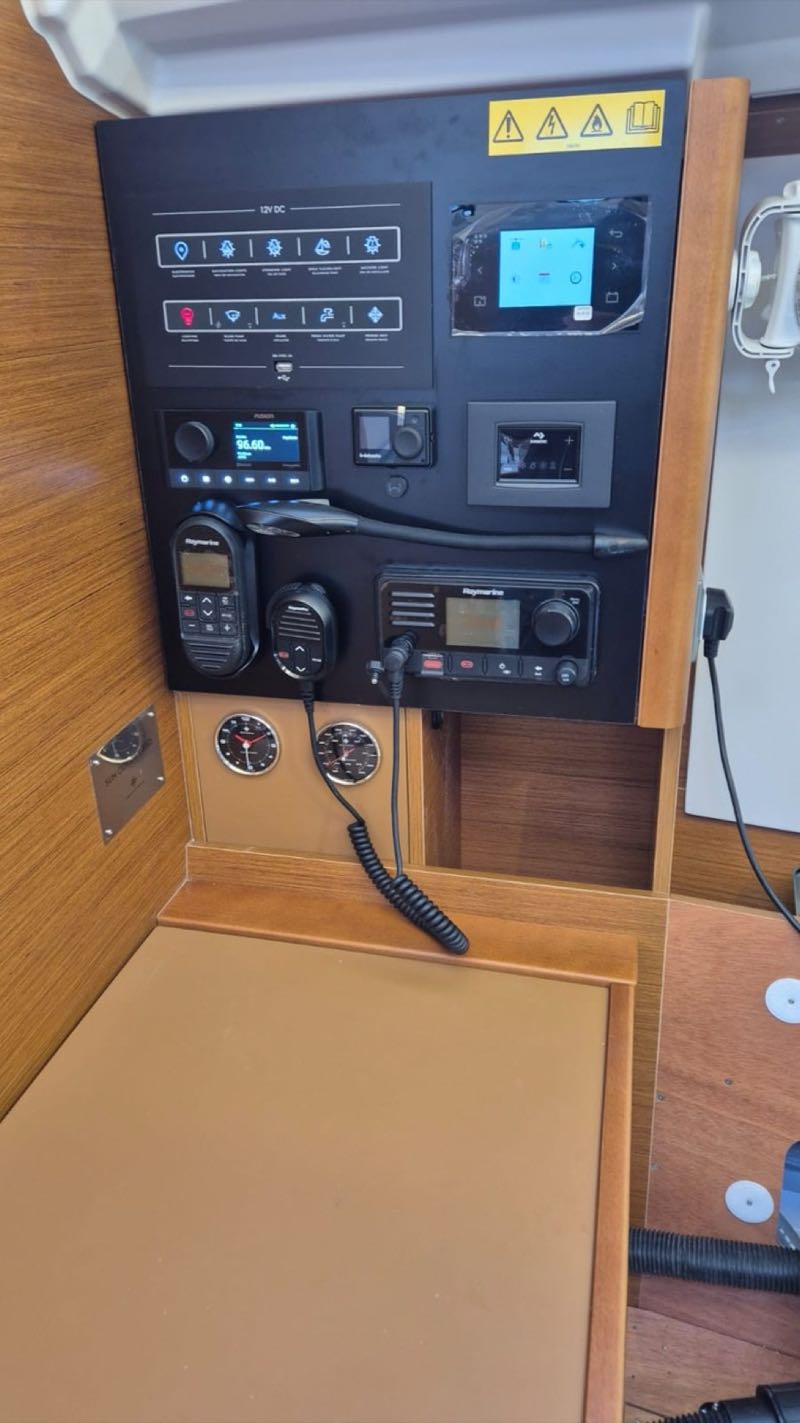
I was determined that the remote VHF microphone should be mounted at the chart table with the other communication and control equipment. The original position of the flexible chart light left too little room, so the light was repositioned and the microphone cradle fitted neatly beside the main radio.

At the rear starboard helm, a separate Raymarine speaker was installed where I could turn it up loudly. When I am sailing alone and sitting at that wheel, I can continue to hear everything happening on the VHF radio without needing to leave the steering position.

Spring–Summer 2026

Creating the website

Building the resource I had wanted to find

After all the decisions, commissioning work and anticipation, I finally had a lovely new boat—but the experience of researching her had often been frustrating. Useful detail about the Sun Odyssey 350 was scattered, limited or simply unavailable, and it had been surprisingly difficult to find the practical information I wanted before ordering and taking ownership.

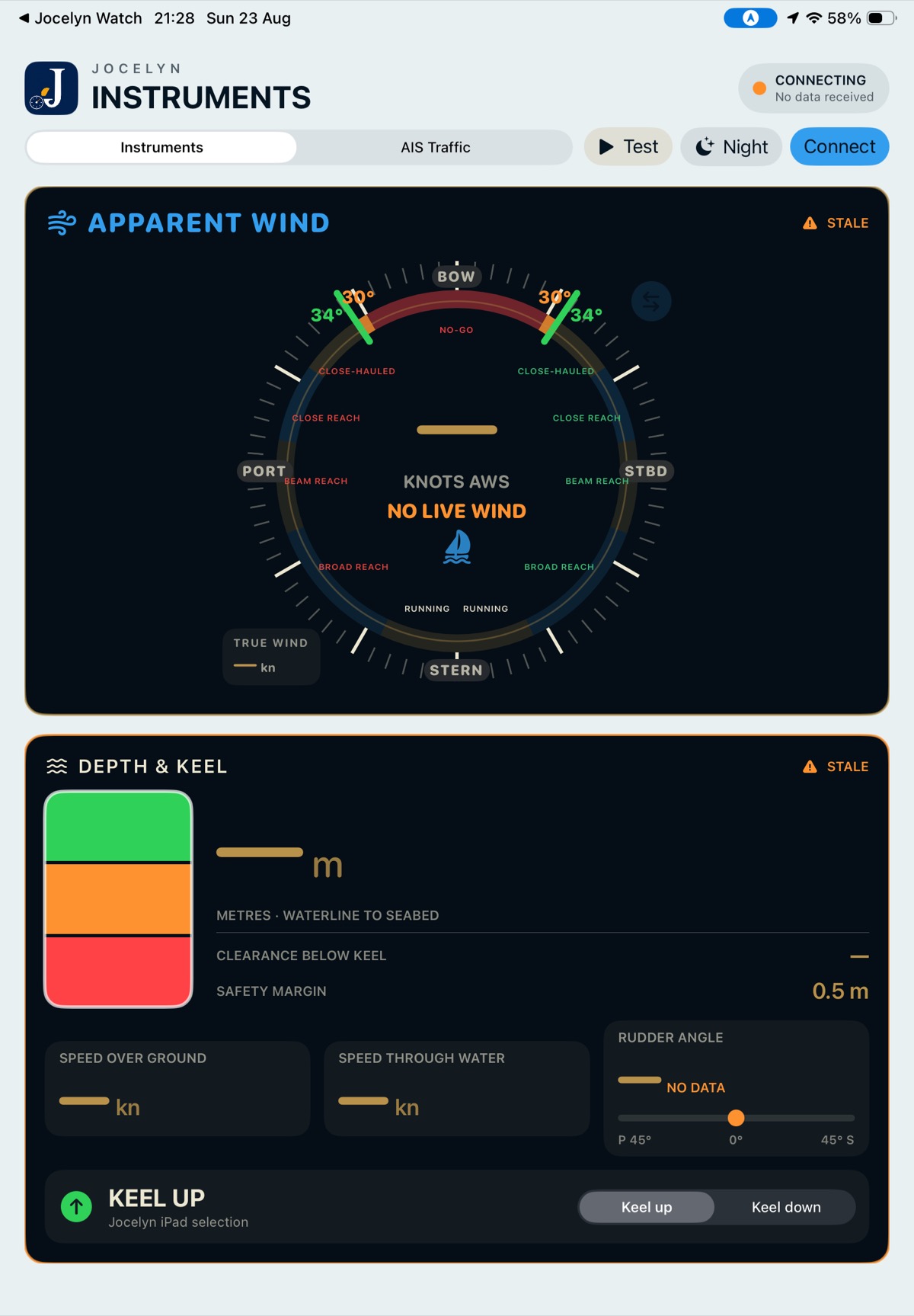
I have always enjoyed technology and websites, and my previous businesses were built around the internet. I wanted to bring that experience together with the possibilities of the newest technology—now, of course, including AI—to create the kind of website I had wished existed during my own research. This site grew from that idea: a detailed, evolving and honest resource for existing and potential owners of this particular boat, grounded in the experience of ordering, commissioning and sailing Jocelyn.

The next chapter

From commissioning to ownership

Jocelyn was delivered on 20 March 2026. Formal handover and the first sail followed on 21 March, with the first independent day aboard on 22 March. The weeks after that brought the pleasure of finally sailing her, but also faults, unanswered questions and an important discovery about the running rigging.

That part of the story will follow here as the account continues.